WarOpsX: Essential Guide to Modern Defense Strategy and Systems
Introduction
Analyzing contemporary security environments requires looking far beyond surface-level news reports and basic tactical summaries. Students, researchers, and defense professionals frequently search for dependable resources that bridge national policy objectives with institutional execution.
This educational guide breaks down the core structural pillars supporting modern defense ecosystems. By exploring strategy, operational design, supply networks, and emerging innovations, readers build a firm conceptual foundation for understanding how large-scale defense frameworks operate.
Understanding Military Strategy and Strategic Decision-Making
Military strategy bridges high-level national policy goals with the practical application of defense instruments. Leaders utilize strategy to align finite resources with long-term security outcomes while anticipating geopolitical shifts and economic constraints.
Grand strategy shapes regional postures and formal defense doctrines. Understanding this hierarchy helps analysts evaluate why governments adopt specific defense stances. Rather than isolating individual engagements, strategic study emphasizes long-term planning, risk management, and the harmonization of national power.
Exploring Defense Studies and Modern Security Concepts
Defense studies blends political science, international relations, modern history, and economics into a cohesive academic discipline. Scholars examine how states and international coalitions prepare for, manage, and prevent conflicts. Modern security concepts extend far beyond traditional interstate war to cover economic resilience and institutional stability.
Students learn to evaluate policy documents, defense agreements, and strategic doctrines with critical objectivity. This inquiry fosters analytical thinking regarding deterrence, crisis resolution, and defense economics. Exploring these broad frameworks provides learners with a clear view of the pressures guiding global decision-makers.
Understanding Military Operations Beyond Tactical Combat
Military operations involve the broad planning, synchronization, and execution of campaigns by large institutions. Media outlets often highlight tactical clashes, but educational frameworks emphasize operational art—the vital link connecting national strategy to tactical actions.
Operations demand rigorous planning, precise unit coordination, and ongoing environmental assessment. Commanders manage risks, distribute assets, and maintain momentum. Analyzing operations through this structural lens uncovers the massive administrative effort required to direct large-scale institutional activities.
How Military Logistics Supports Organizational Readiness
Military logistics acts as the beating heart of any defense organization, driving the movement, supply, and maintenance of personnel and equipment. Without a dependable logistical network, even brilliant strategies collapse. Core logistical components include:
- Supply Chain Management: Procuring, tracking, and distributing essential equipment, fuel, and provisions.
- Transportation Networks: Moving personnel and assets across land, sea, and air corridors.
- Maintenance Operations: Keeping equipment mission-ready through routine servicing and field repairs.
- Sustained Readiness: Storing reserve inventories and building infrastructure to support long-term campaigns.
Understanding Command and Control Systems
Command and control (C2) frameworks empower leaders to exercise authority, direct activities, and maintain constant situational awareness. An optimized C2 architecture ensures information flows seamlessly from field units to high-level decision-makers and down again.
Communication grids, data processing tools, and leadership hierarchies form the backbone of any C2 structure. These mechanisms reduce friction, combat decision fatigue, and guarantee that every unit shares a unified understanding of operational boundaries and goals.
Exploring the Role of Defense Technology
Defense technology continuously revolutionizes how modern organizations communicate, gather data, and execute missions. Innovations ranging from secure communication arrays to artificial intelligence tools influence every dimension of military capability. However, technology requires sound doctrine and skilled operators to deliver true value.
Key technical areas studied in professional literature include automated data analysis, secure communication protocols, sensor arrays, and simulation environments used for training. Evaluating these tools helps analysts balance technological leaps with human leadership.
Learning From Military History and Strategic Evolution
Military history offers a rich laboratory for studying recurring patterns in strategy, technological adaptation, and organizational reform. Researchers examine past campaigns and institutional shifts to identify timeless leadership principles alongside historical miscalculations.
Rather than memorizing dates and battle names, educational analysis investigates institutional evolution. Historians study how organizations adapt to disruptive technologies, shifting alliances, and complex operational environments over time.
Understanding Military Organizational Structure
Military organizations rely on clear hierarchies, standardized protocols, and precise command relationships to function efficiently. Organizational designs typically balance centralized strategic oversight with decentralized operational execution.
Joint force integration—where land, maritime, and air elements operate under unified command—serves as a pillar of modern organizational design. Studying these structures teaches learners how large institutions preserve discipline, accountability, and agility.
Exploring Multidomain Operations Across Modern Defense Environments
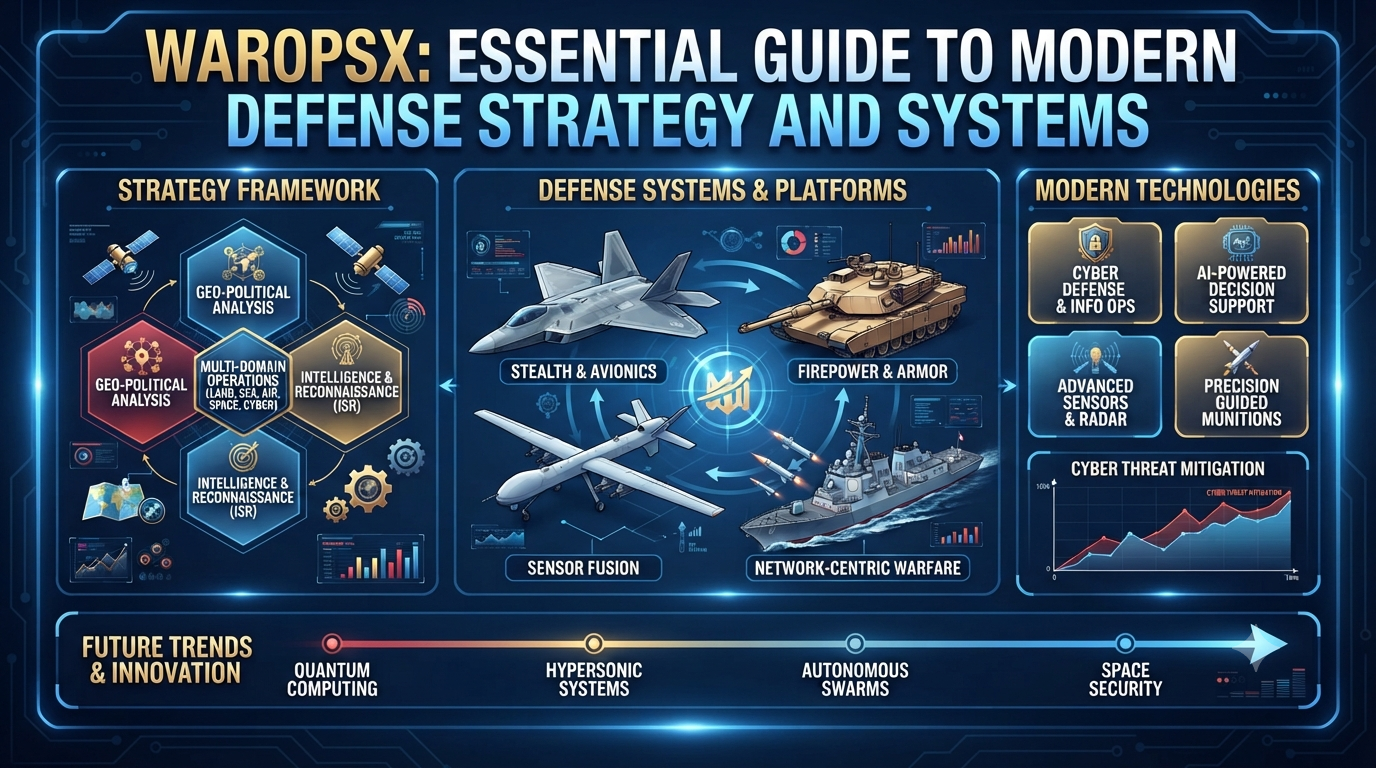
Multidomain operations capture the expansion of defense activities across land, maritime, air, space, and cyber arenas. Modern organizations must synchronize actions across all these spheres simultaneously to secure objectives.
Operational Domain
Primary Focus Area
Core Integration Challenge
Land & Maritime
Surface maneuver and geographic control
Synchronizing movement across physical terrain
Air & Space
Altitude dominance and global observation
Managing high-velocity assets and orbital trackers
Cyber & Information
Network integrity and cognitive security
Guarding data flows and countering disinformation
Understanding Intelligence Surveillance and Reconnaissance
Intelligence, Surveillance, and Reconnaissance (ISR) frameworks supply the informational bedrock necessary for sound strategic decisions. ISR avoids raw espionage; instead, it relies on systematic collection, rigorous analysis, and rapid dissemination of accurate data to leaders.
Effective ISR minimizes uncertainty, anticipates emerging challenges, and optimizes asset allocation. Educational programs examine how raw data undergoes verification and integration into broader operational planning cycles.
How Strategy, Technology, Leadership, and Logistics Work Together
Defense architectures function as interdependent ecosystems where isolation spells failure. Strategy charts the course, technology supplies tools, leadership directs personnel, and logistics sustains the momentum.
When these pillars fall out of sync, institutional efficacy drops. Advanced technology cannot fix poor logistical planning, nor can brilliant strategy rescue weak leadership frameworks. Acknowledging these linkages is vital for comprehensive defense analysis.
Comparing Traditional and Modern Defense Systems
The evolution of defense systems reflects shifts in technology, global connectivity, and modern threat profiles. Traditional systems favored rigid hierarchies and linear operational planning. Modern models prioritize agility, multidomain synchronization, and rapid data exchange.
Traditional Systems: Hierarchical, slow to adapt, localized communications, heavily dependent on physical mass.
- Modern Systems: Network-centric, agile, digitized communications, reliant on data integration and technological leverage.
How Students and Researchers Can Study Defense Concepts
Studying defense topics demands a structured, multi-disciplinary approach. Learners should start by mastering baseline terminology across international relations, strategy, and organizational theory. Reading official defense white papers, historical analyses, and peer-reviewed journals builds profound domain expertise.
Leveraging dedicated educational hubs like WarOpsX grants learners direct access to organized guides, conceptual breakdowns, and thematic libraries that simplify complex security subjects.
Building a Better Understanding of Modern Military Systems
Developing a robust grasp of military systems requires patience, dedication, and reliable educational sources. Learners should bypass sensational media narratives to focus on institutional frameworks, logistical realities, and strategic doctrines.
Maintaining an objective, analytical perspective enables students and professionals to evaluate defense policies and technological trends with exceptional critical depth.
How WarOpsX Supports Defense and Strategy Learning
WarOpsX operates as a dedicated educational platform built to assist students, researchers, and professionals in exploring military strategy, defense studies, and security concepts. Rather than focusing on tactical combat, WarOpsX delivers structured resources connecting strategy, logistics, command structures, and organizational design.
Through clear educational guides, readers examine complex themes like multidomain operations and defense technologies in an organized, accessible layout.
Why Structured Defense Information Is Becoming More Important
As global security dynamics grow increasingly complex, the need for objective, structured defense education expands rapidly. Misinformation and unverified reporting often obscure the genuine mechanics of defense policy and organizational design.
Educational platforms breaking down logistics, history, and strategy into coherent modules bridge the knowledge gap for the upcoming generation of analysts, researchers, and policy learners.
Frequently Asked Questions About WarOpsX
What defines WarOpsX?
WarOpsX functions as an educational knowledge platform centered on military strategy, defense studies, operational frameworks, emerging technologies, and organizational structures within modern security environments.
Does WarOpsX offer tactical combat instructions?
No, WarOpsX concentrates exclusively on education, history, strategy, logistics, organizational design, and high-level defense concepts instead of tactical combat procedures.
Who constitutes the primary audience for WarOpsX?
The platform targets students, researchers, defense enthusiasts, policy learners, and professionals searching for structured educational resources on defense systems.
What subjects fall under military logistics on the platform?
Coverage spans supply chains, transportation networks, equipment maintenance, resource management, institutional sustainment, and support systems for large organizations.
How does WarOpsX address defense technology?
The platform examines technology at a responsible, high-level educational level, covering artificial intelligence, autonomous platforms, sensor grids, communications, and cyber capabilities.
What do multidomain operations mean within WarOpsX materials?
Multidomain operations describe how land, maritime, air, space, cyber, and information arenas interact during modern defense planning.
Does WarOpsX publish tactical intelligence or targeting procedures?
No, Intelligence, Surveillance, and Reconnaissance (ISR) discussions focus entirely on information collection, analysis, monitoring, and strategic decision support.
Are historical resources available on military history?
Yes, the platform examines how past organizations, campaigns, technologies, and strategic thought have shaped contemporary defense systems.
How can students utilize WarOpsX for academic research?
Learners leverage structured guides, thematic breakdowns, and foundational concepts to establish a solid academic base in security and defense studies.
Is WarOpsX a commercial advertising site?
WarOpsX operates primarily as an educational knowledge platform designed to organize and distribute accessible defense and strategy information.
Final Thoughts
Investigating defense strategy, military organizations, and security environments demands a dedication to objective learning and structural analysis. Examining how logistics, technology, leadership, and strategy intersect enables learners to appreciate the deep complexities of global defense systems. Platforms like WarOpsX supply the organized educational bedrock required to navigate these intricate topics with clarity, depth, and precision.